What this museum is
Museum of Ages is a digital museum. This page says plainly what it shows, how it is made and who answers for it.
A museum on the web
Museum of Ages is a website. It works on a phone and on a desktop, and you need no ticket and no account.
A wing is one place at one moment, rebuilt in code. A program describes every beam, wheel and stone, and the computer draws the picture from it. You walk through it stop by stop. Open today: the Leonardo da Vinci wing.
Our mission
We rebuild what was, one place at a time, and make it as accessible as we can, so that everyone can learn from it.
Many places are far away, closed, crowded or gone. Many people cannot travel to them, cannot pay for a ticket, or cannot stand in front of a painting for long. We want to change that, as far as a website can.
We do not replace the visit or the original. We rebuild a place as it was, as far as we know, and invite you to walk in. One place at a time.
Our role
- A first walk, not the visit itself
- A reconstruction, never the original
- A pointer to the museums and libraries that keep the originals
- A complement to school and museum, never a replacement
Breaking down barriers
Not yet
No sound and no spoken words yet. Not yet tested with a screen reader. When that changes, it will say so here.
We are glad when a walk here ends in front of the real thing: in Amboise, in a museum, in the reading room of a library. That is not a loss. That is the mission.
What is shown
Everything shown is one of three things: a reproduction, a reconstruction, or a place the museum designed itself. The label says which.
- Reproductions
- The paintings, drawings and notebook pages are digital copies of works in the public domain. These works are so old that no one holds a copyright in them. Each copy carries the name of its holder, its source and its licence line.
- Reconstructions
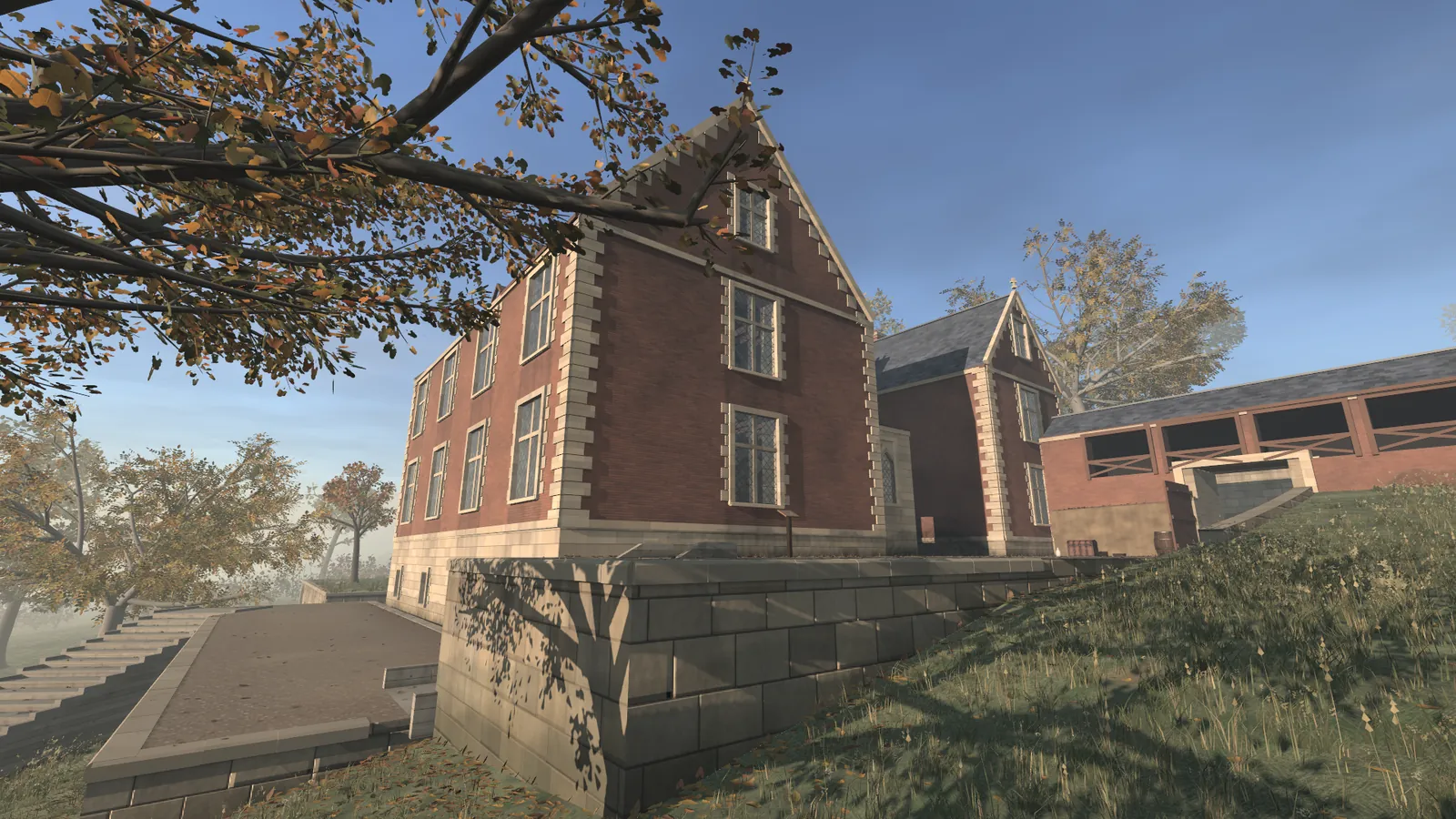
- The house and the machines are built in code: after Leonardo's sheets, after plans and photographs of the house, and after old accounts. They follow the sources as far as the sources go, and each is labelled as a reconstruction. The furniture in the house is of the period. None of it was his. The halls and courts around the house are the museum's own design.
Licences and rights notes
Every picture is shown under a licence or a rights note that allows it, and its label names it. These kinds are in the Leonardo da Vinci wing today. The CC letters stand for standard licences of Creative Commons. Each one says what anyone may do with the picture, and what not.
- CC0
- A public domain mark
- CC BY
- CC BY-SA
- Public domain by age, for old printed copies
- Faithful reproductions of public domain works from Wikimedia Commons
- Scans of the Bibliothèque de l'Institut de France, CC BY-NC-ND 3.0 FR
Where a holder claims rights in the image of a public domain work, the label says so.
How sure a statement is
As it was, as far as we know.
We always say how sure we are. There are four grades, each with its word and its colour, the same as in the wing, so you can see how firm a statement is. The words in a list of paintings, such as disputed or workshop, are something else: they say who is thought to have made a work.
- Documented
- A source from the time says it, and we name the source.
- Reconstructed
- No source says it outright. We worked it out from what the sources give.
- Conjectural
- We think so, or a scholar does, and no source says it. Take it as a reasoned guess.
- Not known
- Nobody knows. We say that too, and we leave the gap open.
Where the originals are
The originals stay with their holders.
Where a work is on loan, or its present place is not confirmed, the list says so.
How the words are made
A person reads, corrects and approves every text before it is published. The drafts are written with AI from a research file that names a source for every fact.
Each stop has three layers of text: the line you read first, a drawer that opens when you want more, and the record, which names the sources.
The sources open beside the text.
Who runs it
Museum of Ages is a project of ChipMates gemeinnützige GmbH, a small German nonprofit in Freiburg. Its purpose is education. Charitable status means we answer to a mission, not to investors.
The museum is independent. It has no partnership with any museum. ChipMates alone decides what it shows and what it says. The site carries no advertising and sells nothing. ChipMates gemeinnützige GmbH pays for the museum.
Michael Strasser represents the company and is responsible for the content.
- Organisation
- ChipMates gemeinnützige GmbH
- Address
- Schusterstr. 50, 79098 Freiburg im Breisgau, Germany
- Register
- Commercial register: Amtsgericht Freiburg, HRB 728848
- Contact
- contact@museumofages.org
Agora CosmicaOur other project: Leonardo da Vinci's life as a story, and a conversation with an AI Leonardo.
Code and rights
The museum's code is not public yet. It will be published under the AGPL-3.0 licence, an open source licence. Anyone may then read it, use it and change it under that licence. The copyright in the texts and pictures the museum makes itself lies with ChipMates gemeinnützige GmbH.
Accessibility and privacy
The museum is built once for the phone and once for the desktop, in English and German, in plain words. It aims at WCAG 2.2 AA, the common standard for accessible websites. It sets no tracking cookies and does no profiling. The details are on the privacy page.
Nonprofit · No tracking cookies, no profiling
Corrections
If a credit, a date or a sentence is wrong, tell us. We correct it as soon as we have checked it.
If your institution holds a work shown here and something on its label should change, write to us at the address above.