Where is Leonardo da Vinci buried?
Leonardo da Vinci died on 2 May 1519 at the manor of Cloux in Amboise, on the Loire in France, at 67. He had asked for a grave in Saint-Florentin, the church inside the royal château, and got it. Early in the 19th century that church was pulled down and the graves in it were broken up. Bones dug up on the site in 1863 lie today under a slab in the château's chapel of Saint-Hubert, and no one has yet proved that they are his.
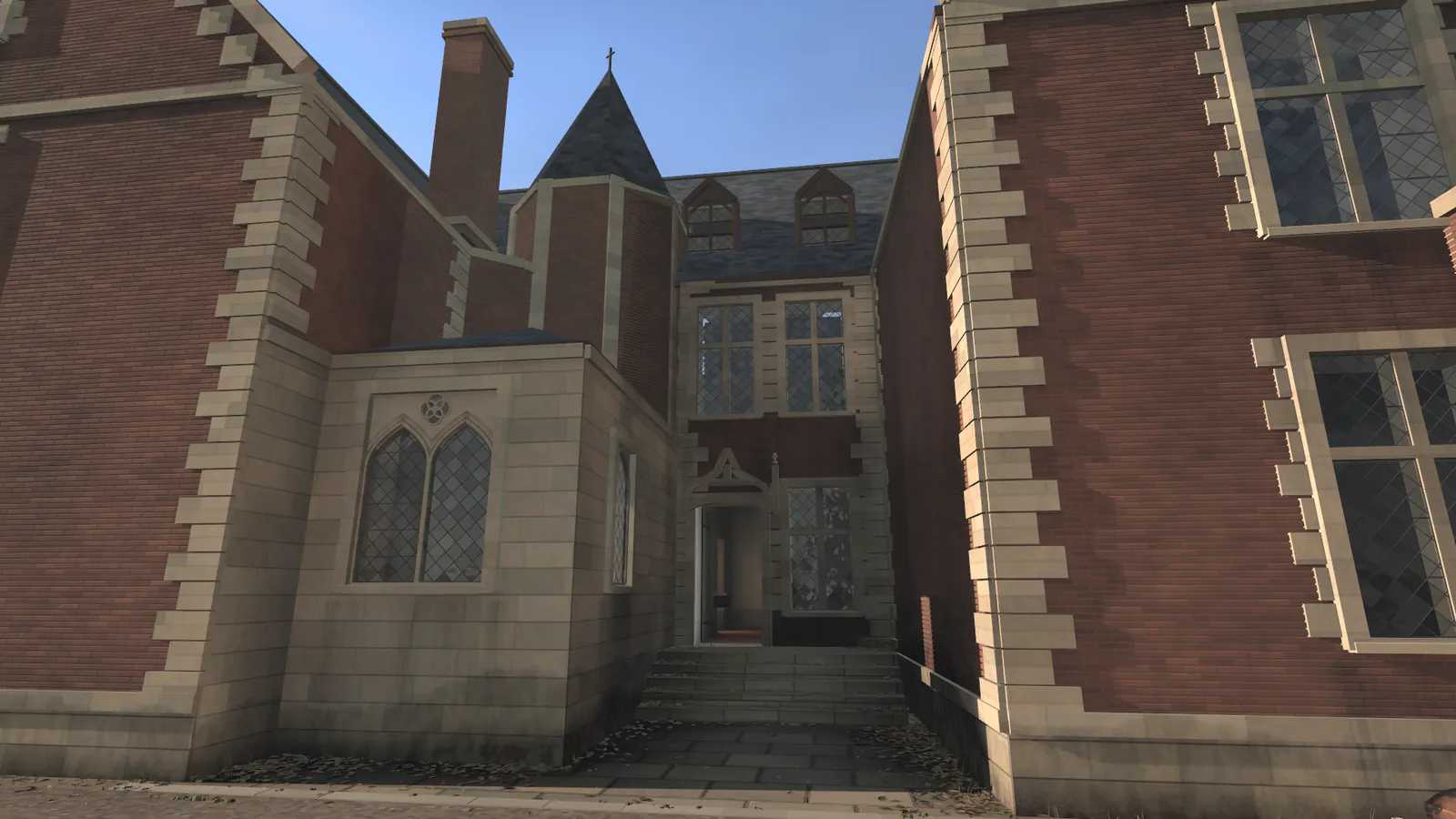
Free entry, no account.
The door opens the Leonardo wing at his last house, in the yard of Clos Lucé. The grave court is the last stop of the walk.
Why he went to France
Francis I, the king of France, invited him. Leonardo's patron in Rome, Giuliano de' Medici, died in 1516. The Clos Lucé, the Château d'Amboise and the Louvre read that death as the reason he accepted. He left Rome in 1516 and came to Amboise, most likely in the autumn. The first note in his hand dated at Cloux is from May 1517.
He was 64 when he came to Amboise. He brought his notebooks, his anatomy sheets and, the Clos Lucé says, three paintings that hang in the Louvre today. With him came Francesco Melzi, a young nobleman from Milan and his pupil, and Battista de Vilanis, his servant. Salaì, his companion of many years, was in France for a time too, but by 1518, the Louvre notes, he was back in Milan.
The king gave him the manor of Cloux to live in, a short walk from the royal château, and a pension: a thousand écus a year by the Clos Lucé and the Italian biographical dictionary Treccani, 700 by the château's own site. The will calls him painter to the King.
Cloux, today the Clos Lucé
The house was not built for him. Étienne le Loup, a servant of Louis XI raised to the nobility, built it in the later 1400s of brick and pale tuffeau stone. Charles VIII bought it, in 1490 the house says, and had a small chapel built. Louise of Savoy raised her children there, the house also says, among them the future Francis I. It was called Cloux then. The name Clos Lucé came later.
It still stands, a listed monument since 1862, restored from 1954 on by the family that has owned it since 1854. The walls and the dovecote are old. The rooms are a presentation: the furniture, and the room shown as his bedroom, are the house's choices, since no document names his room. The house attributes the painted Annunciation in the chapel to his pupils. That is not proven.
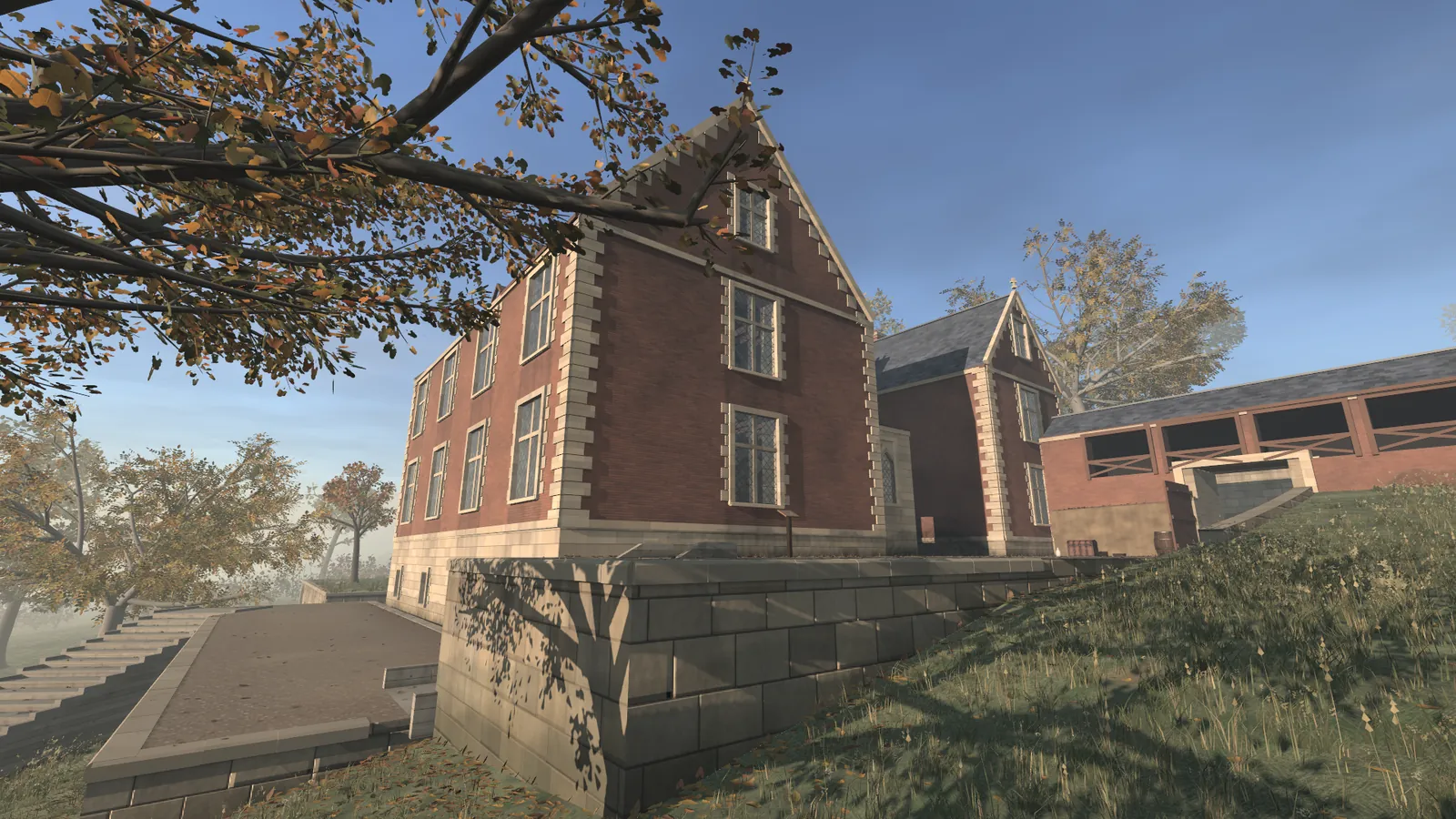
One day in October 1517
On 10 October 1517 a cardinal came to see him. Luigi d'Aragona was travelling through France with his secretary, Antonio de Beatis, and after a midday meal at Tours they went on to Amboise. De Beatis kept a diary, and his entry for that day is why the wing shows this day of all days.
What he wrote, in short. Leonardo was old, over seventy he guessed, though he was 65. He showed the cardinal three pictures: a portrait of a Florentine lady painted for Giuliano de' Medici, a young Saint John the Baptist, and the Virgin and Child in the lap of Saint Anne, today taken to be the Louvre's Mona Lisa, Saint John and Saint Anne, though the diary names no Mona Lisa. Part of his right hand was paralysed, so no more good painting could be expected from him, but he still drew and taught. He said he had dissected more than thirty bodies, and he showed volumes of his writings on anatomy, water and machines, all in Italian.
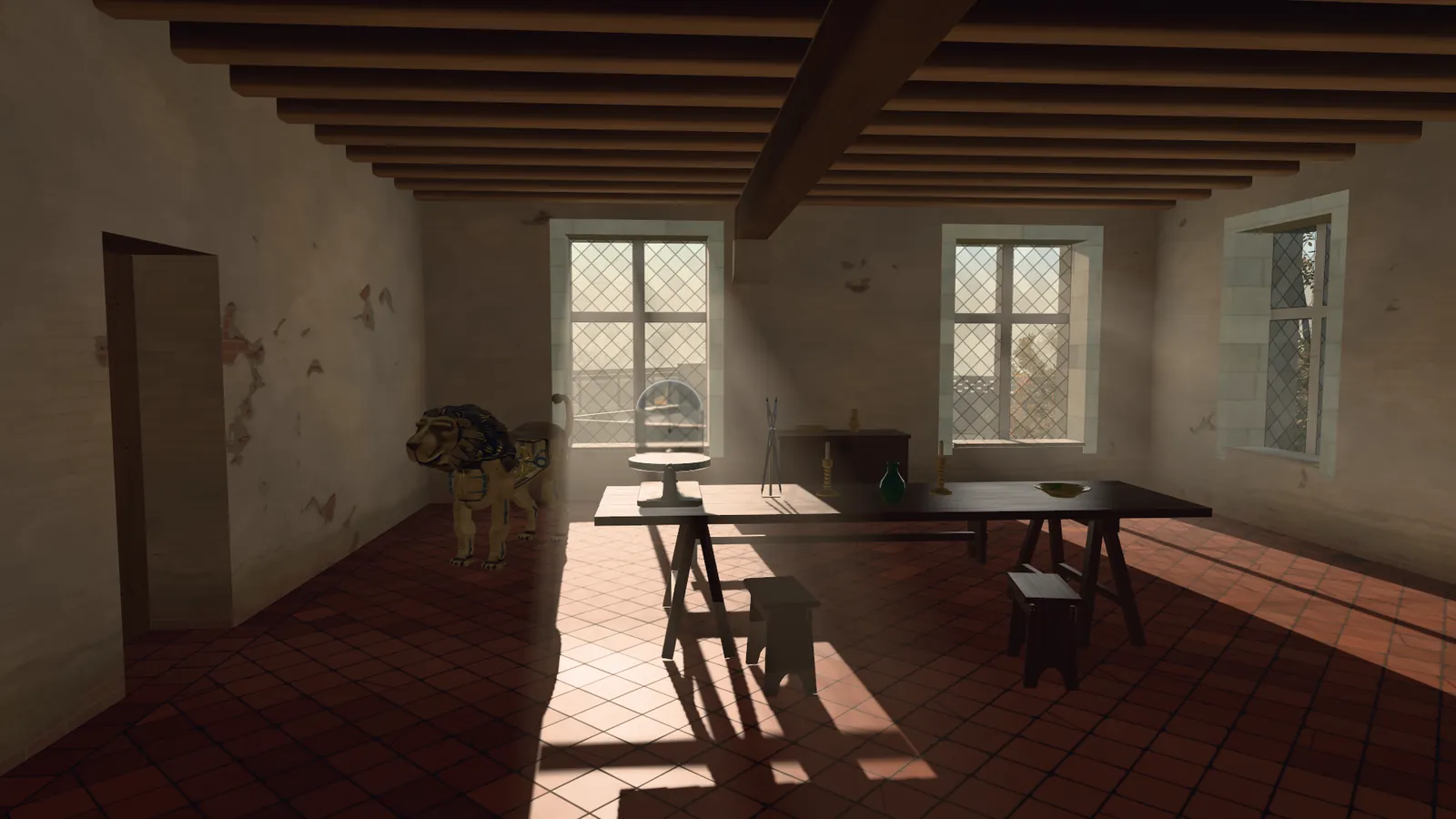
What he worked on in France
He did not stop working. His notes show him at Romorantin, south of Orléans, where he designed a palace for the king, with canals to join it to the Loire. It was never built, and Francis I built Chambord instead. He put on feasts for the court: the château gives him a central part in organising the celebrations at Amboise in the spring of 1518, while saying its records are imprecise.
He kept drawing. The deluge drawings at Windsor are dated about 1517 to 1518, and you can open one of them in the wing, under the study window. And he was still working on the Saint Anne: the last brushstrokes on her dress came to light in the restoration of 2010 to 2012, the Louvre reports.
His will, and how he died
On 23 April 1519 he made his will at Cloux, before a royal notary of Amboise. The original is lost and the text survives in copies. Its date reads 1518, before Easter: the year then turned at Easter, so by our reckoning it is 1519. He wanted his grave in Saint-Florentin, the castle church at Amboise, carried there by its chaplains, with sixty poor men bearing sixty candles. Francesco Melzi, his only executor, got all his books and the instruments and pictures of his trade. No painting is named: the three the cardinal saw are not in the will at all, and the Louvre's reading is that the king had very probably bought them in 1518, through a payment to Salaì.
He died nine days later, on 2 May 1519, at Cloux, aged 67. The record is Melzi's letter of 1 June to Leonardo's brothers in Florence: he had died on 2 May with all the rites of the Church. What he died of, nobody wrote down. Vasari, decades later, says he had been ill for many months. The paralysed hand of 1517 is often put down to a stroke, and a medical paper of 2019 argued for nerve damage instead. Both are readings, not records.
The king at his deathbed
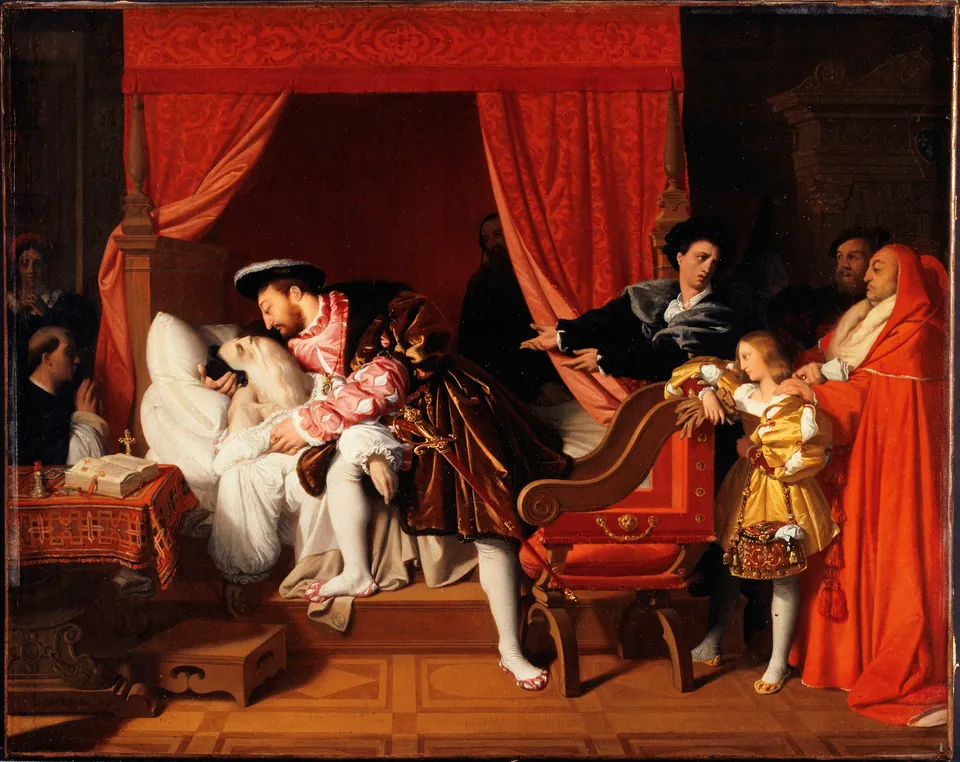
The story goes like this. The king, who often visited him, came in. Leonardo sat up in bed to speak of his illness, a last fit took him, and he died in the king's arms. Vasari told it first in 1550, in the first edition of his Lives, 31 years after the death, and again in 1568, and gave Leonardo's age as 75. He was 67.
Most historians doubt the scene, for two reasons. Royal acts of 1 and 3 May 1519 are dated at Saint-Germain-en-Laye, near Paris, where the court was celebrating the birth of the king's second son. And Melzi's letter, written at Amboise a month after the death, says nothing of the king. That is not proof, since an act could be issued where the chancery sat without the king's own hand, so the scene cannot be ruled out. It is just that no record puts the king in the room.
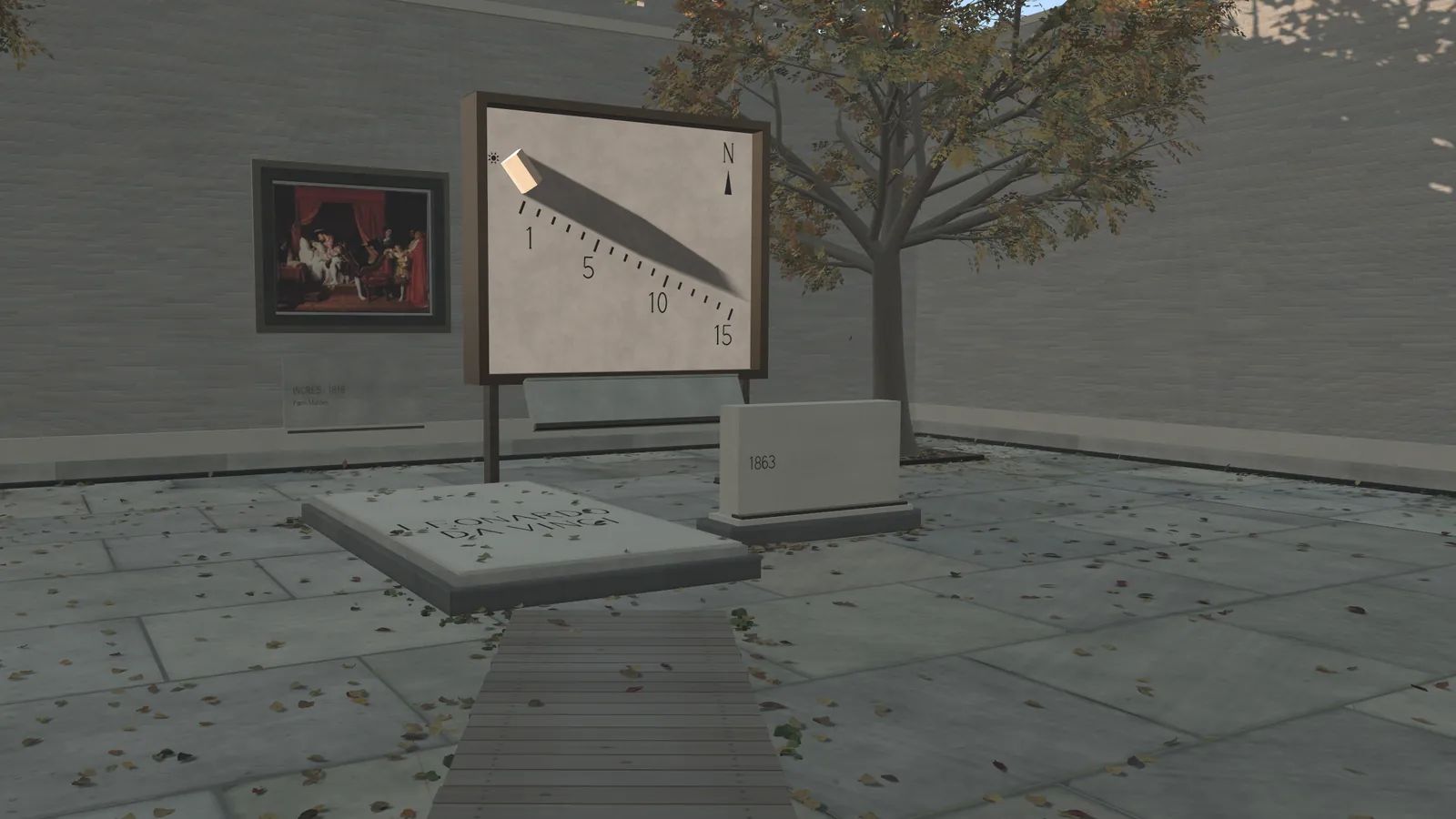
Painters made the scene famous. François-Guillaume Ménageot showed a large canvas of it at the Paris Salon of 1781, and that picture, the Bibliothèque nationale de France says, is what fixed the story in the public mind. It hangs today in the king's bedchamber of the Château royal d'Amboise. Ingres painted the scene again in 1818. His small canvas is in the Petit Palais in Paris, whose own record calls the episode most likely invented. The wing hangs a reproduction of it in its grave court, enlarged and labelled as what it is: a scene imagined three centuries later.
The grave
He was buried in Saint-Florentin, as his will had asked. On what day, nobody knows for sure: the date often given, 12 August 1519, rests on a register entry known only from a copy that surfaced after 1863, and Arsène Houssaye, who printed it, said himself to take it with the greatest reserve.
Early in the 19th century the church was pulled down. The château was then held by a senator of Napoleon. The tombstones were sold, the lead coffins melted and the bones left lying about, Houssaye wrote later.
In 1863 Houssaye dug on the site, with the emperor's backing. On 20 August his workers opened an old tomb in the choir, against the wall: a skeleton with its head on one hand, and a silver coin of the young Francis I. In the rubble near it, turned over more than once, lay pieces of stone with letters: INC, LEO, and three that together read EO DUS VINC. Doctors called the skull a man's of about seventy. Houssaye compared it with a portrait and believed he had found Leonardo, though he wrote that at that moment nobody dared to say so.
The bones he chose were reburied in the château's chapel of Saint-Hubert in 1874, the château says, and a bust in the gardens has marked the first grave since 1869. The floor slab in the chapel carries his name. It was remade in 1930, the château says, and in the 2000s a bronze medallion of his profile was added, by the sculptor Jean Cardot.
How sure can anyone be? Not very. It all rests on one man's reading in 1863. The French state's heritage record for the château says the chapel would contain his remains, in the conditional (contiendrait). The tourist office of Amboise calls them presumed remains. DNA has not settled it either: a research project has looked since 2016 for a sample to compare the bones with, and has no sure one yet. So the answer to where he is buried: the bones said to be his lie in the chapel of Saint-Hubert at Amboise, and nobody can prove that they are his.
The house in our wing
The wing shows his last house on the day of the cardinal's visit, 10 October 1517, at an hour we chose. What is documented about the house and what is our reconstruction stands room by room on the Leonardo page.
The grave court at the end of the walk is the museum's own place, not a copy of the chapel at Amboise: where he lies is not proven, so the museum builds no grave, only a court with a slab that carries his name, a model of the low sun of 2 May 1519 at a minute we chose, and a stone with the year of the dig. Then it gets dark, and the stars stand as they stood over Cloux that evening in October 1517.
Visiting Amboise
The house is open to visitors as the Château du Clos Lucé, vinci-closluce.com. The chapel with the grave, the bust in the gardens and the Ménageot painting are at the Château royal d'Amboise, chateau-amboise.com, and both sites are in French and English.
Sources
The page relies on Leonardo's will of 1519 and Antonio de Beatis' diary of 1517 in their printed editions, Vasari's Lives of 1550 and 1568, the catalogue of the acts of Francis I, Melzi's letter of 1 June 1519 as printed in 1804, Arsène Houssaye's account of his dig of 1863, and the records and pages of the Louvre, the Treccani biographical dictionary, the Château du Clos Lucé, the Château royal d'Amboise, the Bibliothèque nationale de France, the French Ministry of Culture's heritage records, the Petit Palais, Museo Galileo, the tourist office of Amboise, a 2019 paper in the Journal of the Royal Society of Medicine and Smithsonian magazine, all read on 13 October 2026.
If a date, a name or a sentence here is wrong, tell us and we will correct it. To the legal notice
See the house in the wing
This door opens the walk at his last house. It goes through the yard into the great hall, past the chapel and the study window, and ends in the grave court, under the stars of that evening.
Free entry, no account.